

How to Layer Necklaces & Stack Bracelets Like a Pro
Layering isn't about wearing more jewellery, it's about wearing it with intention. A well-built stack looks effortless, but there's a simple logic behind it: varied lengths, varied textures, and a clear focal point. Here's how to build yours.
Layering Necklaces
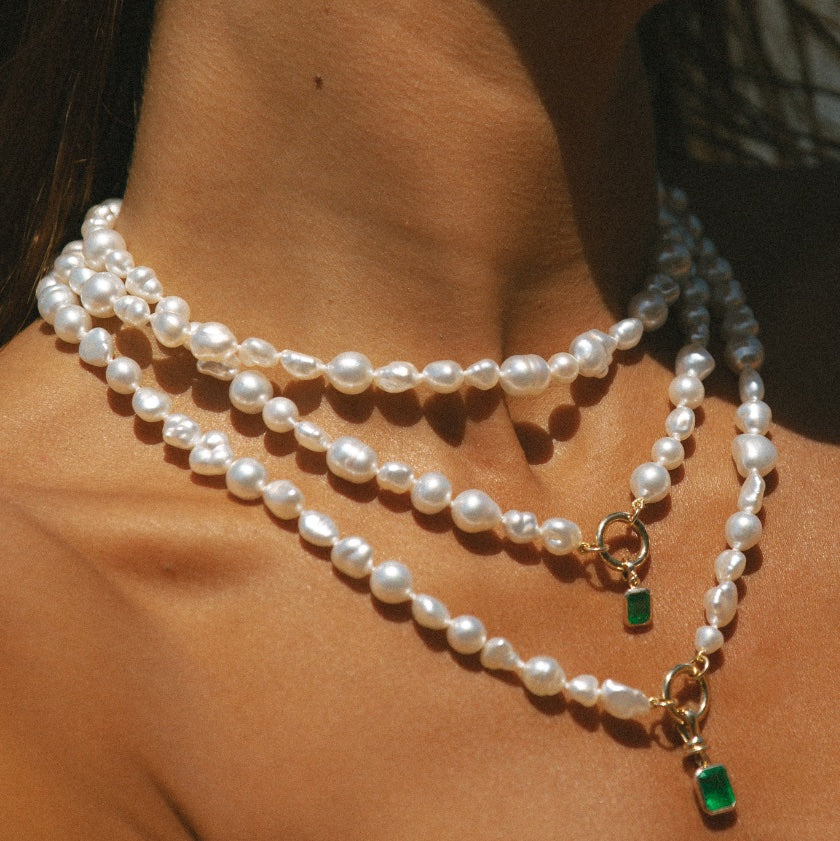
Start With Length, Not Quantity
The single biggest mistake in necklace layering is choosing pieces that are too close in length, they clump together instead of sitting as distinct layers. Aim for at least 3–5cm of difference between each necklace.
A simple three-piece formula:
- Choker (35–40cm) — sits at the base of the throat
- Princess length (45cm) — sits at or just below the collarbone
- Matinee or longer (55–60cm+) — sits mid-chest, often with a pendant
Choose a Focal Point
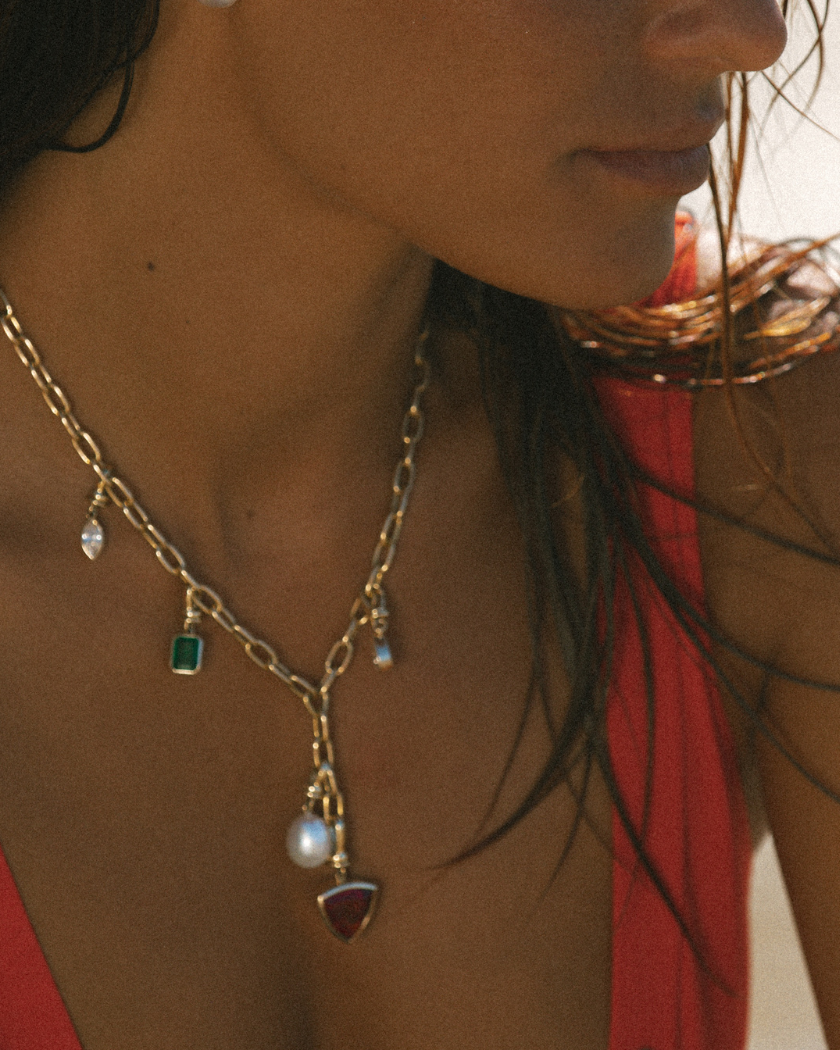
One piece should draw the eye, usually the longest, or the one with the most detail (a pendant, a diamond charm, a Keshi pearl drop). Keep the other layers simpler so they support rather than compete.
Mixing Textures
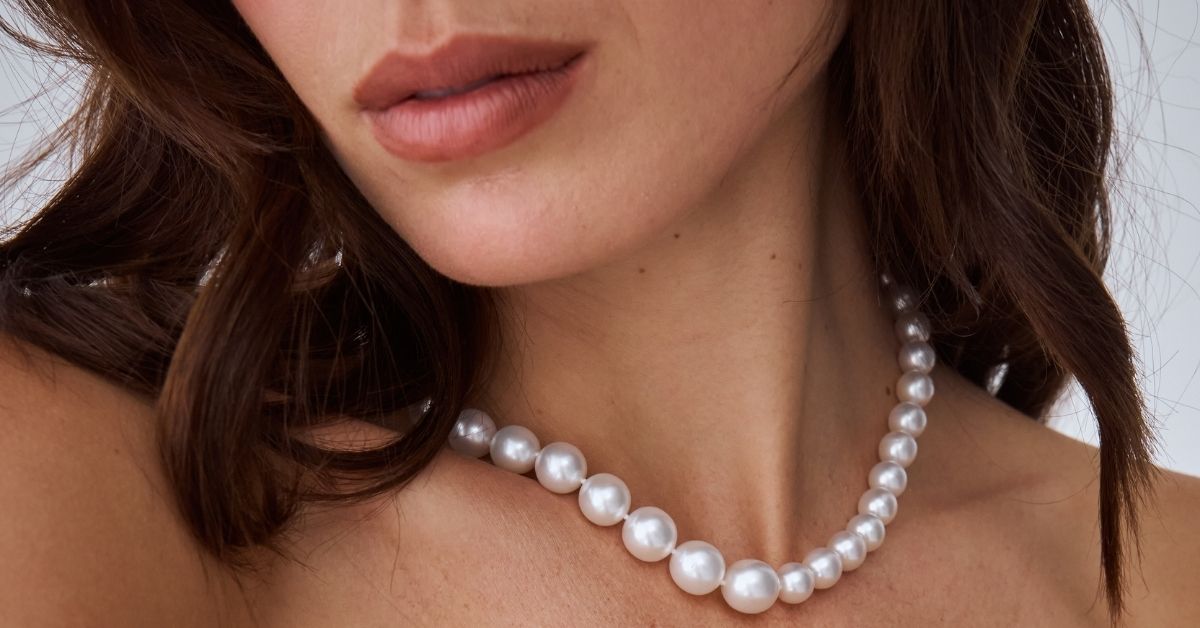
Pearls, delicate chains, and a single statement pendant work well together because they contrast in texture without clashing in tone. Try:
- A fine paperclip chain + a South Sea pearl pendant + a delicate diamond-cut chain
- A pearl choker + a longer chain with a single charm
Stacking Bracelets & Bangles
Mix Widths and Textures
The same "don't repeat yourself" principle applies to wrists. A stack of identical bangles can look flat, instead, combine:
- One structured bangle (like our AVA or SASKIA styles)
- One fine chain bracelet
- One with texture or stones (a pearl or diamond accent piece)
Consider Which Wrist
Most people find it more comfortable to build a fuller stack on their non-dominant wrist, keeping the dominant hand freer for daily tasks, though this is entirely personal preference.
Watch, or No Watch?
If you wear a watch, build your stack on the opposite wrist, or keep the watch-side stack minimal (one slim bangle at most) so it doesn't compete with the watch face.
Mixing Metals: Is It Actually Okay?
Yes, mixing gold and silver tones is one of the biggest jewellery shifts of the last few years, and it's here to stay. The key is to mix intentionally rather than randomly:
- Anchor the look with one dominant tone (say, mostly gold) and use the second tone (silver) for one or two accent pieces
- Let a two-tone piece (like our two-tone styles) act as the "bridge" that ties both metals together in one item
Building Your Stack Around Charms
Our buildable jewellery pieces, paperclip chains, lariat chains, are designed specifically for this. Start with a base chain, then add:
- One meaningful charm as your anchor (initial, birthstone, a symbol)
- One or two smaller charms for texture
- Leave room to add over time, the best stacks are built gradually, not all at once
A Few Styling Rules of Thumb
- Odd numbers tend to look more intentional than even, three necklaces or three bangles often reads better than two or four
- Keep at least one "quiet" piece in every stack so nothing fights for attention
- Day vs. night: for daytime, keep stacks lower-profile (2–3 pieces); evening is the time to add your statement pieces
- Take one thing off before you leave the house, the classic rule still holds for a reason
Where to Start If You're New to Layering
If you only own one or two pieces right now, start with a simple two-necklace combination, a shorter chain with a pearl or charm pendant, layered under a slightly longer plain chain. From there, build outward one piece at a time.
Read more